What needed solving.
Coordinate autonomous coding and provider actions while keeping authority, verification, and human approval visible.
- 01Chat request
- 02Leased sandbox run
- 03Evidence + review
Simplified from the implementation and project notes.
How it fits together.
The web app is backed by Convex for live state; separate worker and gateway services supervise chat and execution. Sandboxed runs use E2B with provider access routed through a credential-bearing gateway.
Repository manifests define verification commands and an evidence ladder. Runs record stages, leases, published commits/PRs, previews, decisions, evidence and acceptance; publication is limited by the repository's earned verification level and the run's achieved level.
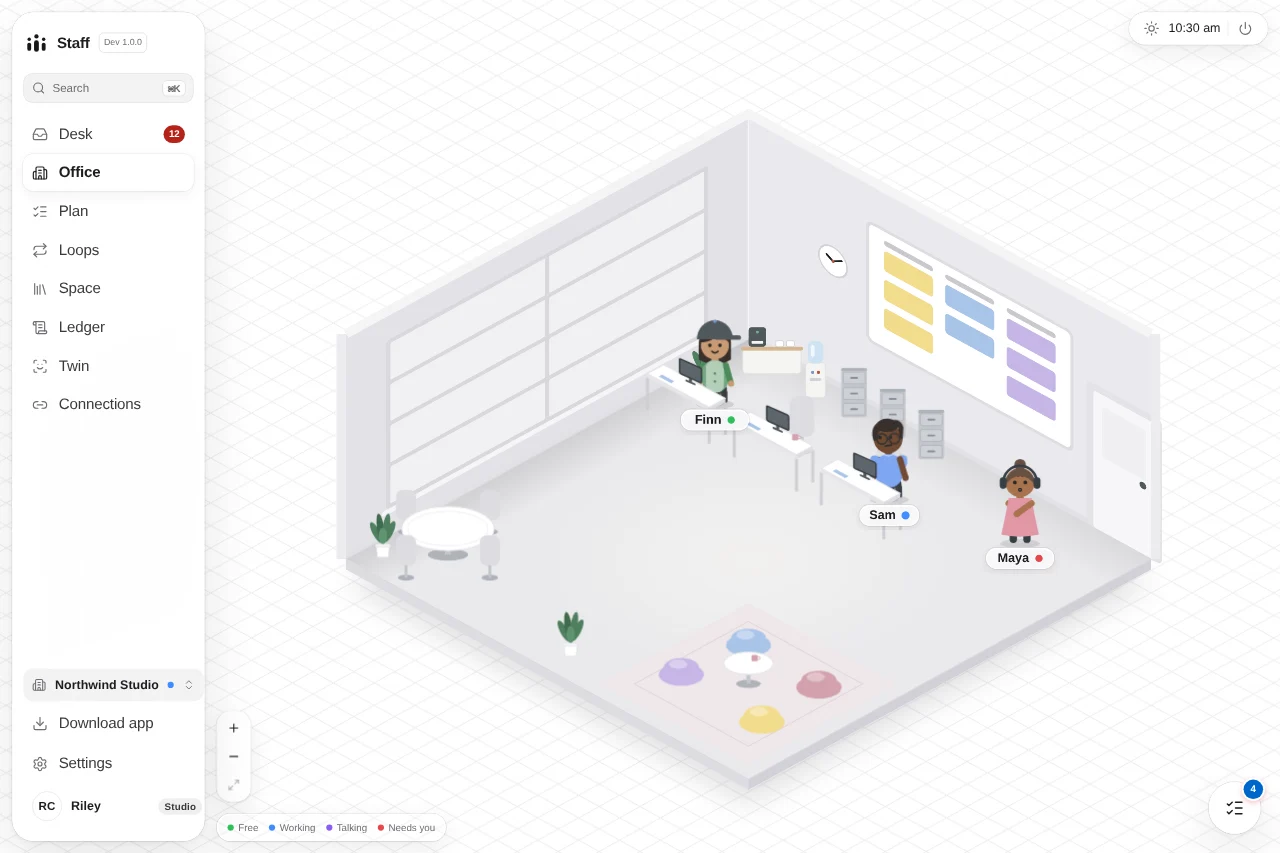
The interface presents chat, tasks, projects and run evidence in an office metaphor. External writes require a human approval, while PR acceptance and merge remain distinct workflow decisions.
Building and checking it.
A user talks to an employee; multi-step work is handed to a leased run, which executes in an isolated sandbox, reports progress to the same thread, and can publish a PR and preview. A person reviews evidence and accepts or unblocks the work.
QA fixture mode supports UI review without backend credentials; production comprises web, worker, gateway and preview proxy services.
Repository verification is earned per project, not assumed from a successful agent run. The documented fault-injection ladder and uncertain-run recovery define what the system can claim; they do not make every connected repository equally verified.
Source notes
Based on repository code and project records reviewed on October 30, 2026. Historical checks are described as recorded, not rerun for this article. Screenshots, renders, and mockups are labeled individually.
staff-ai/README.mdstaff-ai/docs/architecture.mdstaff-ai/docs/verification.mdstaff-ai/package.json